

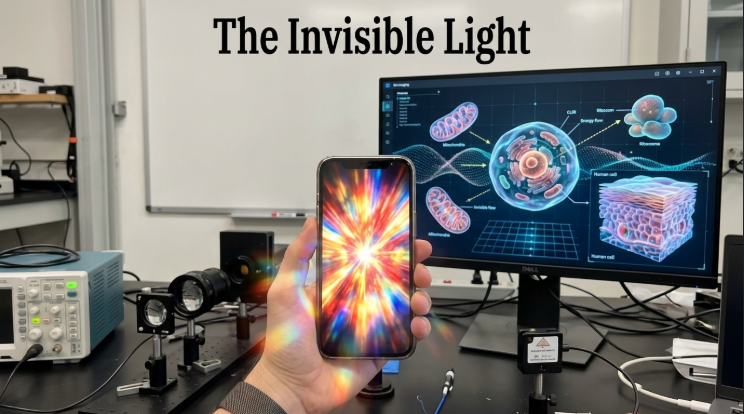
00:00 Intro: The Invisible Life-Giving Light (Near-Infrared)
Near-infrared (NIR) light, spanning wavelengths from 700 to 900 nm, is an invisible spectrum of sunlight that penetrates deep into human tissue to nourish cellular mitochondria. Because NIR is invisible to the human eye, its presence and deficiency often go unnoticed in modern life. By attaching a specialized smartphone camera filter containing rare-earth metals that utilize Anti-Stokes scattering, invisible long-wavelength NIR energy is converted into visible red light, allowing users to visually inspect where NIR light is abundant or missing in their environment.
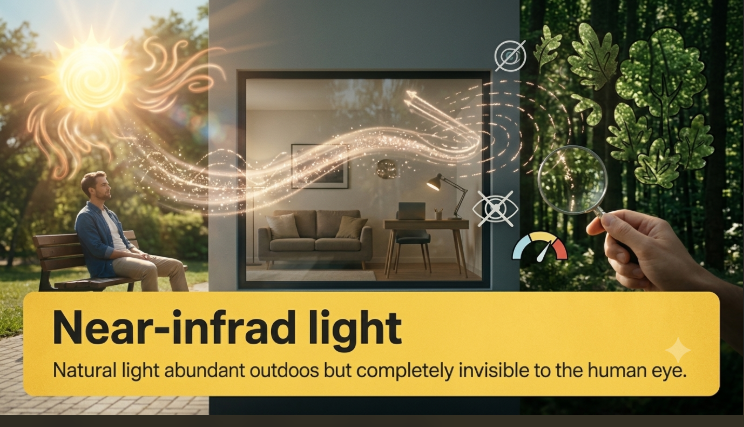
01:15 Outdoor NIR & Systemic Inflammation Reduction
Outdoor green spaces and plant foliage reflect large quantities of solar NIR light. Significant levels of natural NIR reach the human body even in the shade, on overcast days, or during late afternoons. Large-scale observational and clinical research reveals that regular exposure to green spaces and solar NIR is associated with a 28% reduction in type 2 diabetes, a 16% reduction in cardiovascular mortality, and a 31% reduction in total all-cause mortality. Furthermore, environmental interventions like planting urban trees have been shown to lower systemic inflammation markers, specifically reducing high-sensitivity C-reactive protein (hs-CRP) by 13% to 20%.

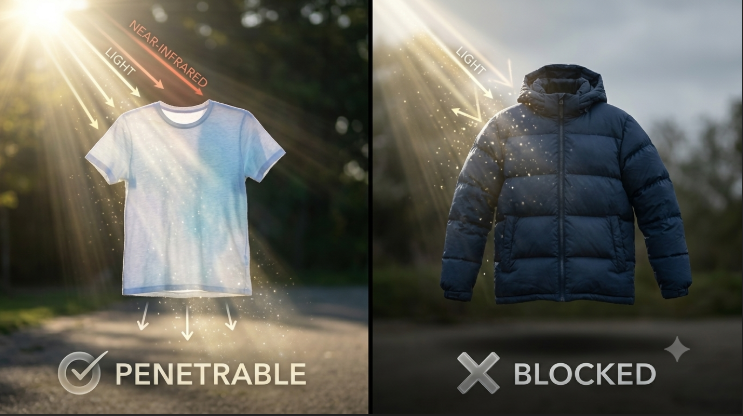
02:30 Deep Tissue & Clothing Penetration of NIR Wavelengths
Unlike ultraviolet or short visible light, long-wavelength NIR possesses remarkable tissue penetration capabilities, travelling deep through skin, muscle, and even the skull. Optical testing demonstrates that standard clothing fabrics—such as cotton, wool, polyester, or surgical scrubs—are nearly 100 times more transparent to 850 nm NIR light than to visible light, allowing the majority of solar NIR to pass straight through single or double layers of clothing directly to the skin. Up to 6 or 7 thick layers of fabric are required to substantially block NIR light.
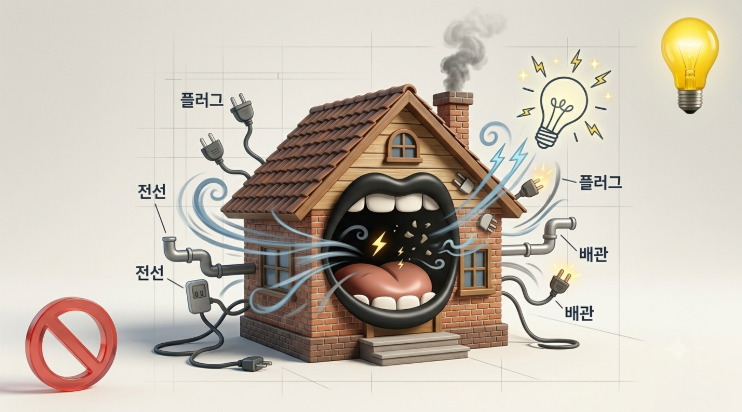
03:45 The Indoor Light Trap: Low-E Windows & LED Deficiencies
Modern indoor environments create a severe state of NIR deprivation. Energy-efficient Low-E (low-emissivity) window glass actively blocks NIR heat radiation, turning visually bright indoor rooms into dark spaces in the NIR spectrum unless windows are opened. Additionally, while traditional incandescent bulbs emitted a broad solar-like spectrum rich in NIR, modern white LED lighting is engineered exclusively for visual efficiency and emits zero NIR light while producing a sharp blue spectral spike. Studies by neuroscientist Dr. Glen Jeffery show that this indoor NIR absence combined with blue LED spikes impairs mitochondrial ATP production and elevates cellular oxidative stress.

05:00 Mitochondrial Stimulation & The Distant “Abscopal Effect”
When absorbed by cytochrome c oxidase in the mitochondrial respiratory chain, NIR light boosts ATP energy synthesis, reduces reactive oxygen species (ROS), improves systemic glucose regulation, and lowers inflammation. Groundbreaking research published in Nature Scientific Reports confirms the “abscopal effect”: exposing a person’s torso or back to 850 nm NIR light stimulates mitochondria throughout the body, improving retinal cone cell performance and color vision perception in the eyes even when direct light to the eyes is completely shielded.
06:15 Restoring Light Ecosystems & Practical Daily Habits
To counteract indoor NIR starvation, daily outdoor habits are essential—spending at least 15 minutes outdoors in natural sunlight and green spaces recharges cellular mitochondrial “batteries”. For indoor spaces, practical solutions include introducing broad-spectrum incandescent lighting or adopting innovative functional white lighting (such as broadband NIR-integrated LED technology) that restores long-wavelength NIR energy to optimize mitochondrial health, cognitive alertness, and overall systemic well-being.