


[00:00 – 01:00] Part 1. Prologue: The Truth About Indoor Lighting We Never Knew, and Brain Health
What if the lighting we sit under at our desks every day could do more than simply brighten the room, and actually boost our brain’s memory and cognitive performance? Modern people spend more than half of each day under artificial LED lighting. However, most ordinary LED lights lack the near-infrared wavelengths that natural sunlight is rich in, which can leave mitochondria, the powerhouses of our cells, more easily fatigued and reduce energy production. What if the desk lamp in your study room or the lighting in your office also emitted near-infrared light that activates brain cells? How would our daily lives change?

[01:00 – 02:15] Part 2. Technical Innovation: Broadband Near-Infrared (NIR) in a Single LED Chip
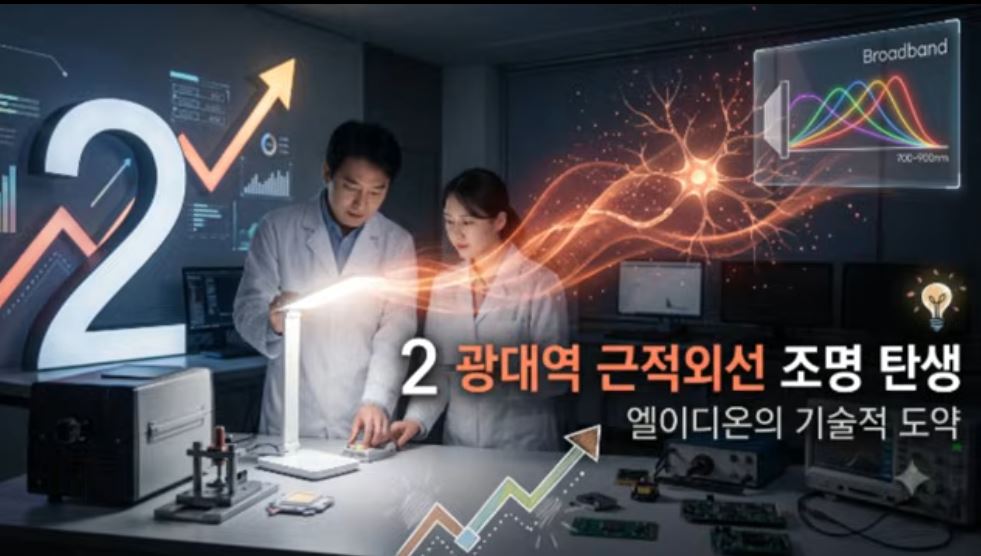
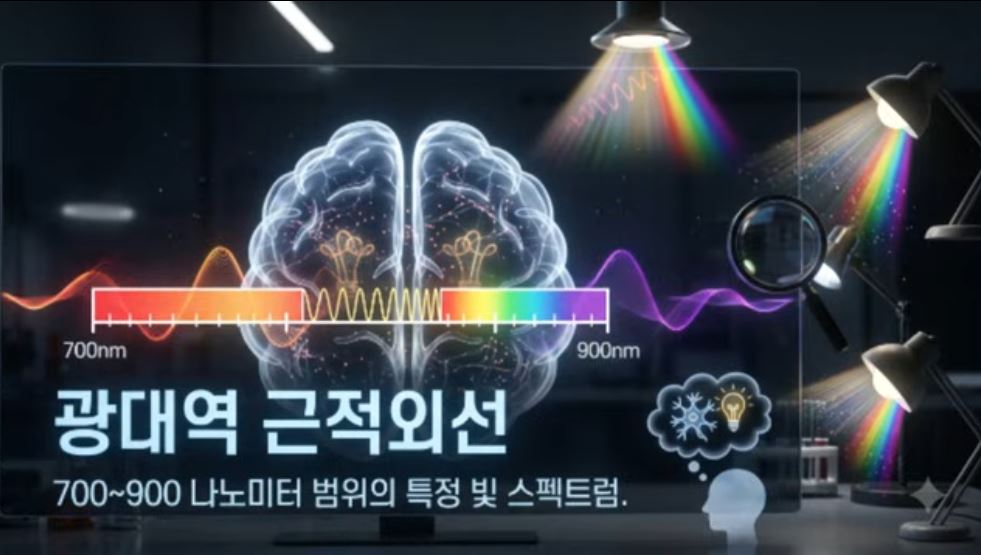
LEDON, a functional lighting specialist, focused on exactly this point. Until now, near-infrared technology has been used only in separate, dedicated irradiation devices that shine light on a specific part of the body, which limited its continuous use in everyday life. LEDON has developed a new technology that coats the surface of a white LED with its own proprietary light-conversion material. With this technology, the company succeeded in emitting broadband near-infrared light in the 700 to 900 nanometer range and white light simultaneously from ‘a single LED chip.’ Without adding a separate light-emitting chip, an innovative white light was born that lets you receive near-infrared energy naturally in the lighting environments you encounter every day, such as reading, studying, and computer work.
[02:15 – 03:45] Part 3. KTC Human Application Test: The Secret Behind a 52% Reduction in Memory Errors (★ Deep dive after 2:30)
So what real change did this everyday light bring to our brains? To validate the technology, LEDON ran a four-week human application test at the Korea Testing Certification (KTC) institute. Participants performed a complex cognitive task in which they had to remember information shown on a screen and compare it with new information to make judgments. After four weeks of using the lighting, participants’ memory test accuracy rose markedly, from 93.75% before use to 97.00%. Converted into an error rate, this fell from 6.25% to 3.00%, a remarkable change in which memory errors dropped by a full 52%. In addition, the index of the ability to process and distinguish multiple pieces of information at the same time also rose sharply, from 2.53 to 3.36.
[03:45 – 05:00] Part 4. Precision Brain Analysis: Increased Prefrontal Blood Flow and Brain Cell Activation
Behind this improvement in memory were remarkable biological changes inside the brain. Brain measurements taken during the cognitive task confirmed a statistically significant increase in oxygen-carrying blood components in some regions of the ‘prefrontal cortex,’ the key area that governs thinking, judgment, and concentration. Near-infrared wavelengths penetrate deep through the skin and body tissue and stimulate the mitochondria of neurons in the prefrontal cortex. As mitochondrial ATP energy synthesis is activated and cerebral blood flow becomes smoother, brain cells are able to perform information-processing tasks in optimal condition.

[05:00 – 06:15] Part 5. Commercialization and Scalability: From Desk Lamps for Exam Takers to B2B Healthcare
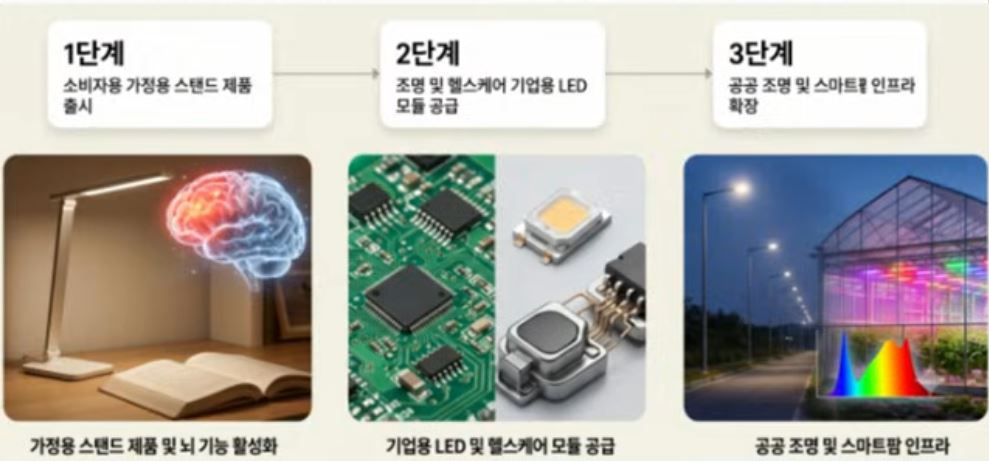
Based on these precise clinical results, LEDON is moving toward full-scale commercialization. First, it plans to launch finished desk lamps for exam takers, students, and office workers who spend long hours at their desks. Going further, leveraging the excellent scalability of its single-LED-chip technology, the company is pursuing the supply of broadband near-infrared LED packages and light modules to lighting, home appliance, and healthcare companies. Building on the know-how it has established in smart-farm plant lighting, public lighting, and specialty semiconductor lighting, it is now expanding its business into the everyday lighting and wellness market as a whole.
[06:15 – 07:00] Part 6. Epilogue: The Future of Brain Health Made With Everyday Light
An era in which you can protect brain cells and improve concentration just by switching on a desk lamp every day, without visiting a hospital or a special treatment room. LEDON’s broadband near-infrared white lighting technology has changed the very concept of the light we encounter every day, from a simple visual tool into a ‘brain health wellness solution.’ The power of near-infrared hidden in everyday light: the future of smart lighting for your learning, your work, and your healthy life begins now.